

Alright, so you’ve got a cat, and let’s be honest, your sofa is probably looking a bit worse for wear. It’s a common problem! Cats need to scratch, it’s just what they do. But instead of letting them go to town on your favourite armchair, getting them a proper cat scratcher is the way to go. This guide is all about helping you pick the best one, making sure both you and your furry friend are happy.
Key Takeaways
- Scratching is natural for cats; it keeps their claws healthy, helps them stretch, and is a way to mark their territory.
- There are different types of cat scratchers, including vertical posts, horizontal pads, and wall-mounted options, to suit various cat preferences.
- Materials like sisal rope and cardboard are often preferred by cats due to their texture and durability.
- When choosing a cat scratcher, consider your cat’s size and habits, the scratcher’s stability, and how it fits with your home’s look.
- Having multiple scratchers in different locations can encourage your cat to use them and prevent furniture damage.
Why Your Cat Needs a Good Cat Scratcher
So, you’ve got a cat, and you’ve probably noticed them doing that thing where they drag their claws down your sofa, or maybe that favourite armchair. It’s not personal, honestly! It’s just cats being cats, and there’s a whole heap of reasons why they do it. Understanding these instincts is the first step to keeping both your cat and your furniture happy.
Understanding Your Cat’s Natural Scratching Instincts
Cats scratch for a few key reasons, and they’re all pretty important to your feline friend. Firstly, it’s all about nail maintenance. You know how we shed skin? Cats shed the outer layer of their claws, and scratching helps them get rid of that old, dull casing to reveal a nice, sharp new one underneath. It’s like a manicure, but way more effective. They also do it to stretch out their bodies. Think of it as a full-body yoga session, working their leg, shoulder, and back muscles. It’s a great way for them to stay limber, especially for indoor cats who don’t get to roam and hunt as much. And then there’s the marking. Cats have scent glands in their paws, and when they scratch, they leave behind both a visual mark and their unique scent. It’s their way of saying, “This is my spot!” which is why you might see them returning to the same scratching spots.
The Essential Role of Scratching for Feline Health
Beyond just keeping their claws in tip-top shape and giving them a good stretch, scratching is also a massive stress reliever for cats. When they’re feeling a bit anxious or have pent-up energy, a good scratch can really help them calm down and feel more in control. It’s a natural behaviour that contributes to their overall well-being, both physically and mentally. Providing them with an appropriate place to do this is really important for their happiness. Without a designated spot, they’ll just find one themselves, and that’s usually where your nice things come in.
Protecting Your Furniture from Paws
This is probably the one you’re most interested in! If your cat doesn’t have a suitable scratching surface, they’re going to find one. And let’s be honest, your sofa, your curtains, or that lovely rug you just bought are probably much more appealing than a plain old wall. By giving them their own designated scratchers, you’re redirecting that natural behaviour away from your belongings and onto something they’re supposed to scratch. It’s a win-win, really. You save your furniture, and your cat gets to do what comes naturally. It’s a simple way to avoid a lot of household conflict and keep your home looking its best, while also keeping your cat content. You can find some great options for cat scratching posts that are designed to be irresistible to felines.
Exploring the Different Types of Cat Scratchers
Right then, let’s talk about the nitty-gritty of cat scratchers. It’s not just about shoving a bit of cardboard in the corner, oh no. Cats are surprisingly particular about their scratching surfaces, and understanding the different types available is key to keeping both your moggy and your sofa happy.
Vertical Scratching Posts for Full Body Stretches
These are probably what most people picture when they think of a cat scratcher. Think tall, sturdy posts, often wrapped in that rough-and-tumble sisal rope. The beauty of a vertical post is that it allows your cat to get a really good stretch, from their toes right up to their shoulders. It’s like a full-body workout for them, mimicking that satisfying stretch they do after a good nap. A good vertical scratcher should be tall enough for your cat to fully extend themselves. If it’s too short, they won’t get that satisfying full stretch, and they might just go back to using your curtains.
Horizontal Scratch Pads for Ground-Level Scratching
Not all cats are vertical scratchers, though. Some prefer to get down and dirty on the floor. Horizontal scratch pads, often made of corrugated cardboard or tough fabric, are perfect for these ground-level scratchers. They might lie on their side, or even on their back, to get a good scratch going. These are usually pretty simple, often just flat pieces of material, but they can be incredibly effective. They’re also great for older cats or those with joint issues who might find climbing a bit of a chore.
Inclined Scratchers: The Best of Both Worlds
Now, for the indecisive kitties, or perhaps just for variety, there are inclined scratchers. These are basically ramps or angled surfaces. They offer a bit of both worlds – a bit of a stretch, but not quite the full vertical extension. They can be a really good compromise and often come with a bit of a lip or edge that cats seem to enjoy digging their claws into. Think of it as a gentle slope for a satisfying scratch.
Wall-Mounted Scratchers for Space-Saving Solutions
If you’re a bit tight on floor space, or if your cat just loves to scratch at vertical surfaces like door frames, then wall-mounted scratchers are your new best friend. These attach directly to your wall, saving precious floor real estate. They can be anything from a simple sisal panel to more elaborate, multi-level scratching surfaces. They’re a clever way to give your cat a dedicated scratching zone without cluttering up the place.
Materials Matter: What Your Cat Will Love
When you’re on the hunt for the perfect scratching post, the material it’s made from is a pretty big deal. It’s not just about how it looks in your living room, though that’s a factor for some of us! It’s really about what your cat actually likes to sink their claws into. Think about it – your cat has preferences, just like you do. If they’re currently going to town on your sofa arm, that might give you a clue about what texture they’re after.
The Appeal of Sisal Rope
Sisal is a real winner for a lot of cats. It’s a natural fibre, and it’s got this rough, satisfying texture that’s brilliant for claw maintenance. It’s tough, too, so it can handle a good amount of scratching without falling apart too quickly. You’ll often see it wrapped tightly around posts, giving that classic, sturdy scratching experience. It’s a go-to for a reason, and many cats just seem to instinctively love it.
The Comfort of Carpeted Scratchers
Now, some cats are more into softer surfaces. If your kitty enjoys a good scratch on your carpets (sorry about that!), then a carpeted scratcher might be right up their alley. These can feel a bit more like a cosy rug, offering a different kind of satisfaction. Just make sure the carpet material is durable enough to withstand scratching and doesn’t snag too easily, or it might not last very long. It’s a good idea to check out what kind of carpets your cat already seems to favour.
The Satisfying Texture of Cardboard
Cardboard scratchers are often the budget-friendly option, and honestly, a lot of cats go absolutely wild for them. There’s something about the layered cardboard that’s just incredibly satisfying to shred. They’re lightweight, and you can find them in all sorts of shapes, from flat pads to angled ramps. The downside is that they can create a bit of a mess with little cardboard bits everywhere, but you can easily pop them inside a tuff tray to catch the debris. They’re great for trying out different styles without breaking the bank.
Ultimately, the best material is the one your cat actually uses. Don’t be afraid to experiment a bit. What works for one cat might not work for another, and that’s perfectly okay. Observing your cat’s current scratching habits is your best guide.
Choosing the Right Cat Scratcher for Your Feline Friend
So, you’ve figured out why your cat needs a scratcher, and you’ve had a peek at the different kinds available. Now comes the fun part: picking the actual scratcher that your cat will actually use. It’s not just about grabbing the first thing you see, though. Think of it like choosing a comfy armchair for yourself – you want it to be just right!
Considering Your Cat’s Size and Scratching Style
First off, let’s talk about your cat. Are they a tiny kitten or a hefty Maine Coon? A big cat needs a sturdy, tall scratcher that won’t wobble when they get serious about their claw-sharpening. Kittens might be happy with something smaller to start, but they grow fast, so it’s worth thinking ahead. Also, watch how your cat likes to scratch. Do they stretch up tall, reaching for the sky? A vertical post is probably their jam. Or do they prefer to dig their claws into something on the floor, maybe while lounging? A flat scratcher might be more their speed. Some cats even like a bit of an angle, giving them a good stretch. The best scratcher is one that mimics their natural scratching behaviour.
The Importance of Stability and Durability
This is a biggie. If a scratcher tips over the first time your cat uses it, they’re likely to be put off it for good. You want something solid. Look for scratchers with a wide, heavy base, or ones that are designed to be anchored. Sisal rope is usually a good bet for durability, as it holds up well to vigorous scratching. Cardboard scratchers are great, but they can wear out faster, so you might need to replace them more often. Think about how much your cat weighs and how enthusiastically they scratch – this will give you a clue about how robust the scratcher needs to be.
Matching Your Cat Scratcher to Your Home Decor
Okay, so this might seem a bit superficial, but let’s be honest, we all want our homes to look nice. Thankfully, cat scratchers have come a long way from being just functional eyesores. You can find some really stylish options these days. From sleek, modern designs that blend into your living room to more natural, wood-finished posts, there’s something out there to suit most tastes. Some even come with little perches or toys attached, adding extra appeal. It’s about finding a balance between what your cat loves and what you don’t mind looking at every day. After all, if it looks good, you’re more likely to place it in a prominent spot where your cat will actually use it, rather than shoving it in a corner. It’s a win-win, really, and can even be a talking point when friends visit, much like how people share their love for their feline companions online.
How Many Cat Scratchers Should You Have?
So, you’ve got a cat (or maybe a few!), and you’re wondering just how many scratching posts or pads you actually need. It’s not as simple as just buying one and calling it a day, unfortunately. Think of it like this: would you want to eat the same meal every single day, or have only one spot to relax in your house? Probably not. Cats are similar.
One Per Cat, Plus Extras
The general rule of thumb, and it’s a pretty solid one, is to have at least one scratching station for every cat you own. So, if you have two cats, aim for at least two scratchers. But here’s the kicker: it’s even better to have more. Having a couple of extra scratchers scattered around the house can really make a difference. This helps prevent any squabbles over territory and gives your feline friends choices. They might prefer one type of scratcher in the living room and another in the bedroom, or maybe a tall post for a good stretch in one area and a flat pad near their favourite napping spot.
Strategic Placement for Maximum Use
Where you put these scratchers is just as important as how many you have. Cats often like to scratch after they wake up from a nap, or when they’re feeling a bit playful. So, try placing a scratcher near their usual sleeping spots. Another good idea is to put one near any furniture they might be tempted to use as a scratching post. If they’ve already got a favourite spot on the sofa arm, pop a scratcher right next to it. This makes the designated scratcher the easier, more appealing option. You want to make it super convenient for them to do the right thing. It’s all about making their lives easier and yours, well, less about replacing upholstery! If you’re looking for some great gift ideas for your cat, you might find some inspiration here.
Cats are creatures of habit and also creatures of preference. What one cat loves, another might ignore. Offering variety in both type and location is key to ensuring your scratchers get used and your furniture stays safe.
Encouraging Your Cat to Use Their New Scratcher
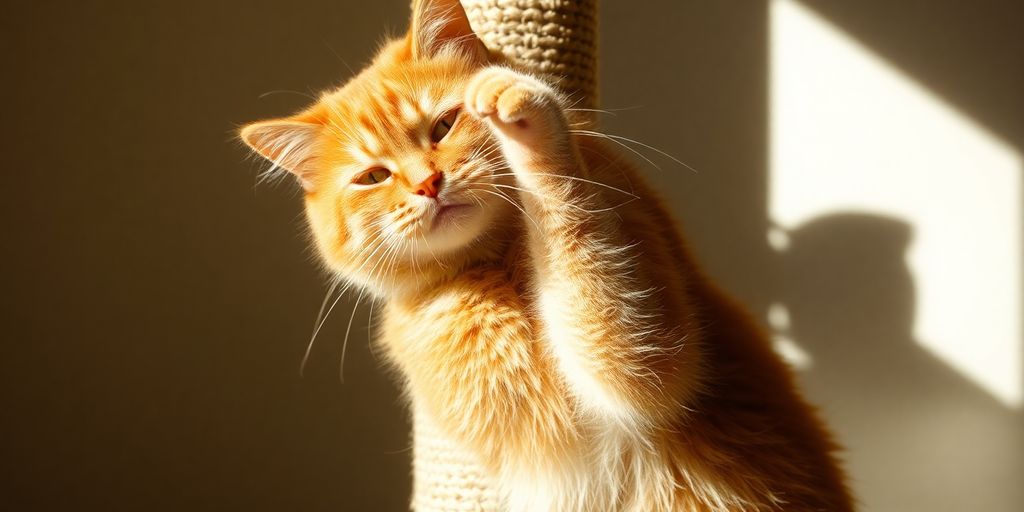
So, you’ve gone and got your cat a shiny new scratcher. Brilliant! But what if they just sniff it, look at you like you’ve lost your marbles, and then go straight back to shredding your favourite armchair? Don’t despair, it happens. Getting your feline friend to appreciate their new scratching post often takes a bit of gentle persuasion and a sprinkle of savvy. It’s all about making the scratcher the most appealing option in the house, and thankfully, there are some tried-and-tested ways to do just that.
The Magic of Catnip and Treats
Let’s start with the obvious crowd-pleaser: catnip. Most cats go absolutely bonkers for it. A little sprinkle of dried catnip, or even a catnip spray, directly onto the scratcher can work wonders. It’s like a neon sign saying, “This way for fun!” If your cat isn’t a catnip fan, don’t worry. You can use their favourite treats as a lure instead. Pop a few tasty morsels on the scratcher, or even just near it, to encourage them to investigate. The goal is to create a positive association with the scratcher from the get-go.
Positive Reinforcement for Good Scratching Habits
Whenever you catch your cat actually using their new scratcher, make a fuss! A little bit of praise, a gentle stroke, or even a quick play session right after they’ve had a good scratch can really reinforce the behaviour. They’ll start to connect using the scratcher with good things happening to them. It’s much better than any scolding if they happen to scratch somewhere they shouldn’t. You want them to think, “Ooh, scratching this thing gets me pets and maybe a treat!”
Making the Scratcher Appealing
Placement is key, remember? If your cat has a favourite spot where they tend to scratch, try putting the new scratcher right next to it. Once they’re using it regularly, you can slowly move it to a more convenient location for you. Also, keep the scratcher clean. Cats have sensitive noses, and a dusty or smelly scratcher might put them off. Give it a quick vacuum now and then, especially if it’s carpeted. If it’s sisal, just give it a brush. You might also want to try rotating the sisal sections if your scratcher has them, to keep the texture interesting. Think of it like giving them a fresh canvas to work with. If they seem to be losing interest, a fresh dusting of catnip or a new placement might just reignite their passion for it. You can find some great options for cat attractants to help make the transition even smoother.
When It’s Time for a New Cat Scratcher
Even the most beloved cat scratcher won’t last forever. Cats are pretty enthusiastic scratchers, and over time, even the sturdiest sisal rope or cardboard will start to show some serious wear and tear. Knowing when to replace your cat’s scratching post is key to keeping them happy and your furniture safe. It’s not just about aesthetics; a worn-out scratcher might not be as appealing or effective for your feline friend.
Signs Your Cat Scratcher Needs Replacing
So, how do you know it’s time for a new one? Keep an eye out for these tell-tale signs:
- Frayed Edges and Loose Material: If the scratching surface looks like it’s been through a shredder, with lots of loose bits of rope or carpet, it’s probably time for a change. This can be a bit messy and less satisfying for your cat.
- Instability: Does the scratcher wobble or tip over when your cat uses it? A wobbly post is not only less effective but can also be a safety hazard. Cats need a stable surface to really get a good stretch and scratch.
- Lack of Interest: If your cat suddenly seems to be ignoring their usual scratching spot and is instead eyeing up your sofa, it might be because the current scratcher is past its prime. They might just not find it appealing anymore.
- Significant Damage: Beyond general wear, if there are large holes, tears, or the base is damaged, it’s definitely time for a replacement.
Maintaining Your Cat Scratcher for Longevity
While you can’t stop wear and tear completely, a little maintenance can go a long way in extending the life of your cat’s favourite scratching post. Think of it like looking after your own things – a bit of care makes them last longer!
- Regular Inspection: Give the scratcher a quick once-over every week or so. Check for any loose threads or signs of excessive wear. You can trim any loose bits carefully with scissors to prevent them from unraveling further.
- Tighten Loose Parts: If your scratcher has screws or bolts holding it together, make sure they’re snug. A quick tighten can prevent wobbling and keep it stable.
- Keep it Clean: While cats are generally clean creatures, sometimes their scratching posts can accumulate fur or dust. A quick vacuum or a wipe-down with a damp cloth can keep it fresh. Avoid using harsh cleaning chemicals, as these can deter your cat.
- Rotate and Redirect: If you have multiple scratchers, try rotating their positions occasionally. If you notice your cat scratching something they shouldn’t, gently redirect them to their scratcher and perhaps give it a little sprinkle of catnip to make it more appealing. This is similar to how you might adjust a cat flap if it’s not working quite right.
Replacing a worn-out scratcher isn’t just about tidiness; it’s about continuing to provide your cat with the essential outlets they need for their natural behaviours. A fresh, sturdy scratcher will keep them engaged and less likely to turn their attention to your favourite armchair.
So, What’s the Verdict?
Right then, we’ve gone through all sorts of scratching posts and pads, haven’t we? It’s pretty clear that finding the right one isn’t just about stopping your sofa from getting shredded, though that’s a big bonus, let’s be honest. It’s really about giving our feline mates a proper way to do their thing – stretching, keeping those claws in check, and just generally being a cat. Don’t be afraid to try a few different types if the first one doesn’t quite hit the mark. What works for one cat might not work for another, and that’s perfectly okay. Just keep an eye on what your cat seems to favour, make sure whatever you pick is nice and sturdy, and pop it somewhere they actually hang out. A happy cat, with perfectly maintained claws and a safe place to scratch, means a happier home for everyone. Sorted!
Frequently Asked Questions
Why do cats feel the need to scratch things?
Cats scratch for a few key reasons. It helps them keep their claws in good shape by shedding old outer layers. It’s also a great way for them to stretch their muscles and feel good. Plus, scratching is how they leave their scent and marks, kind of like leaving a message for other cats to let them know they’ve been there.
Are cat scratchers really necessary for my cat?
While not strictly essential for survival, cat scratchers are super important for your cat’s happiness and health. They give your cat a proper place to do their natural scratching, which stops them from ruining your sofa or carpets. It’s also a good way for them to burn off energy and feel less stressed.
How many scratching posts should I have in my house?
It’s a good idea to have at least one scratcher for each cat you own. If you have more than one cat, having a few extra scratchers spread around the house can prevent arguments over who gets to use which one. This way, your cat always has a suitable place to scratch nearby.
How can I encourage my cat to use a new scratcher?
You can get your cat interested by putting the scratcher in a spot they already like to hang out. Sprinkling some catnip on it or giving them a treat when they use it can also work wonders. Positive attention and praise when they scratch the right thing will help them learn quickly.
When should I replace my cat’s scratching post?
You’ll know it’s time for a new one when the current scratcher looks pretty worn out, maybe the material is coming off, or it’s become wobbly. If your cat seems to be ignoring it or scratching other things instead, that’s another sign it might be time for a fresh one.
What are the best materials for a cat scratcher?
Sisal rope is a top choice because it’s tough and cats love the texture for sharpening their claws. Cardboard scratchers are also popular as they’re affordable and many cats enjoy the feel of scratching them. Some cats also like carpeted scratchers, especially if they’re similar to your home’s carpets.
